
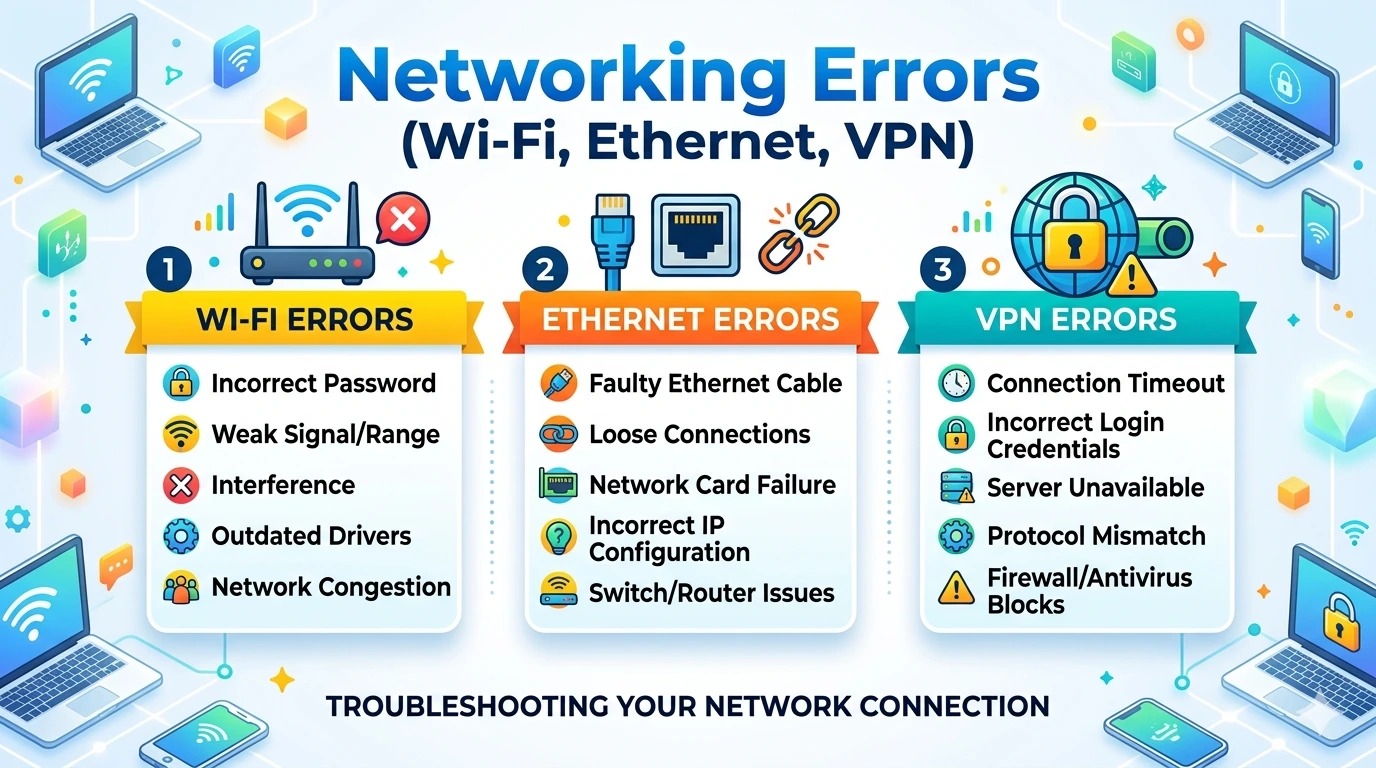
Networking utilities are the lifeline of Windows 11. Unlike entertainment or customization apps, tools such as Wi‑Fi, Ethernet, and VPN are fundamental for connectivity. They enable access to the internet, secure communication, and remote work. When these utilities fail, the impact is immediate—users lose access to online resources, cloud services, and secure networks.
Why Networking Utilities Matter in Windows 11
Windows 11 emphasizes seamless connectivity.
- Wi‑Fi provides wireless access to networks and cloud services.
- Ethernet ensures stable, high‑speed wired connections.
- VPN secures communication by encrypting traffic and masking IP addresses.
Errors in these utilities can prevent users from:
- Connecting to the internet.
- Accessing shared files or servers.
- Maintaining secure communication channels.
Without reliable networking utilities, productivity, entertainment, and security are compromised.
The Growing Complexity of Networking Ecosystems
Modern networking is more integrated than ever.
- Wi‑Fi supports advanced protocols like WPA3 and integrates with cloud authentication.
- Ethernet connects with enterprise networks, VLANs, and advanced routing.
- VPN integrates with corporate policies, multifactor authentication, and cloud services.
This complexity increases the likelihood of errors. A single misconfigured driver or corrupted update can destabilize multiple networking utilities simultaneously.
Common Symptoms of Networking Errors
Users typically encounter one or more of the following issues:
- Wi‑Fi: Cannot connect to networks, frequent disconnections, or slow speeds.
- Ethernet: No internet access, limited connectivity, or driver conflicts.
- VPN: Connection failures, authentication errors, or dropped sessions.
These symptoms are disruptive because they affect fundamental system operations.
The Importance of Systematic Troubleshooting
Networking errors can feel overwhelming, especially since they affect both personal and professional tasks. However, most issues can be resolved through systematic troubleshooting. Windows 11 provides built‑in recovery tools such as Network Troubleshooter, Device Manager, and PowerShell commands, while vendors release patches to address known bugs.
By approaching networking errors methodically—starting with basic checks and progressing to advanced solutions—users can restore connectivity without resorting to drastic measures like reinstalling Windows. This structured approach saves time and ensures stability.
Why This Guide Matters
This article series is designed to serve as a comprehensive resource for Windows 11 users facing networking challenges. It will:
- Explain the root causes of common networking errors.
- Provide step‑by‑step instructions for resolving them.
- Offer advanced techniques for persistent problems.
- Share preventive strategies to minimize future disruptions.
By following this guide, users will gain both practical solutions and a deeper understanding of how networking utilities interact with Windows 11. This knowledge empowers them to troubleshoot confidently, ensuring that Wi‑Fi, Ethernet, and VPN remain reliable across all environments.
Common Issues
Networking utilities are critical for Windows 11. When they malfunction, users lose access to the internet, shared resources, or secure connections. Below are the most common issues with Wi‑Fi, Ethernet, and VPN, along with explanations of why they occur.
Wi‑Fi Errors
1. Cannot Connect to Network
- Causes: Incorrect password, misconfigured SSID, or driver conflicts.
- Impact: Users cannot access the internet or local resources.
2. Frequent Disconnections
- Causes: Weak signal, interference from other devices, or outdated drivers.
- Impact: Productivity is disrupted by unstable connectivity.
3. Slow Speeds
- Causes: Bandwidth congestion, router misconfiguration, or outdated Wi‑Fi standards.
- Impact: Streaming, downloads, and cloud services become sluggish.
4. Authentication Errors
- Causes: WPA2/WPA3 protocol mismatches or corrupted credentials.
- Impact: Users are blocked from joining secure networks.
Ethernet Errors
1. No Internet Access
- Causes: Faulty cables, disabled network adapter, or misconfigured IP settings.
- Impact: Wired connections fail, leaving users offline.
2. Limited Connectivity
- Causes: DHCP server issues or incorrect static IP configuration.
- Impact: Users can connect locally but not to the internet.
3. Driver Conflicts
- Causes: Outdated or incompatible Ethernet drivers.
- Impact: Adapter fails to function properly.
4. Slow Speeds
- Causes: Damaged cables, mismatched duplex settings, or router/switch issues.
- Impact: Wired connections underperform compared to expected speeds.
VPN Errors
1. Connection Failures
- Causes: Incorrect server address, blocked ports, or firewall restrictions.
- Impact: Users cannot establish secure tunnels.
2. Authentication Errors
- Causes: Expired certificates, incorrect credentials, or multifactor authentication failures.
- Impact: VPN login attempts fail, blocking remote access.
3. Dropped Sessions
- Causes: Network instability, overloaded VPN servers, or misconfigured keep‑alive settings.
- Impact: Secure connections terminate unexpectedly.
4. Slow Performance
- Causes: High latency, bandwidth throttling, or inefficient routing.
- Impact: VPN connections become impractical for streaming or remote work.
Cross‑Networking Issues
1. Compatibility Problems After Updates
- Causes: Windows updates replacing stable drivers with newer versions.
- Impact: Wi‑Fi adapters stop working, Ethernet drivers fail, VPN clients crash.
2. Security and Permissions Errors
- Causes: Enhanced Windows 11 security blocking apps from accessing network adapters.
- Impact: VPN clients fail, Wi‑Fi cannot authenticate, Ethernet cannot initialize.
3. Cloud Integration Failures
- Causes: Network instability or outdated authentication protocols.
- Impact: Wi‑Fi fails to connect to enterprise SSIDs, VPN fails to authenticate with cloud servers, Ethernet fails to sync with domain controllers.
Why Identifying Common Issues Matters
Recognizing these patterns allows users to troubleshoot logically. Instead of guessing, they can match symptoms to likely causes and apply targeted fixes. This structured approach reduces downtime and ensures that solutions are effective rather than temporary.
Networking Errors (Wi‑Fi, Ethernet, VPN) Step‑by‑Step Fixes
Networking errors can be disruptive because they cut off access to the internet, shared resources, and secure connections. Fortunately, most issues can be resolved through systematic troubleshooting. By following a logical sequence of steps, users can restore functionality in Wi‑Fi, Ethernet, and VPN without unnecessary reinstalls or data loss.
Wi‑Fi – Step‑by‑Step Fixes
Step 1: Restart Wi‑Fi and Windows
- Turn Wi‑Fi off and on via Settings → Network & Internet → Wi‑Fi.
- Restart Windows to refresh services.
Step 2: Forget and Reconnect to Network
- Open Settings → Network & Internet → Wi‑Fi → Manage known networks.
- Select the problematic SSID → Forget.
- Reconnect with correct password.
Step 3: Update Wi‑Fi Drivers
- Open Device Manager → Network adapters.
- Right‑click Wi‑Fi adapter → Update driver.
Step 4: Reset Network Settings
- Open Settings → Network & Internet → Advanced network settings → Network reset.
- Restart PC.
Step 5: Run Network Troubleshooter
- Open Settings → System → Troubleshoot → Other troubleshooters.
- Select Internet Connections.
Ethernet – Step‑by‑Step Fixes
Step 1: Check Physical Connections
- Ensure cable is securely plugged into PC and router.
- Test with another cable or port.
Step 2: Restart Ethernet Adapter
- Open Device Manager → Network adapters.
- Right‑click Ethernet adapter → Disable device.
- Re‑enable after a few seconds.
Step 3: Configure IP Settings
- Open Settings → Network & Internet → Ethernet.
- Select Edit IP assignment → Automatic (DHCP).
- If DHCP fails, configure static IP manually.
Step 4: Update Ethernet Drivers
- Open Device Manager → Network adapters.
- Update drivers to latest version.
Step 5: Run Command Line Reset
- Open Command Prompt (Admin).
- Run:
ipconfig /release
ipconfig /renew
ipconfig /flushdns
VPN – Step‑by‑Step Fixes
Step 1: Restart VPN Client and Windows
- Close VPN client completely.
- Restart Windows to refresh services.
Step 2: Verify Credentials
- Ensure username, password, and certificates are correct.
- Update expired credentials.
Step 3: Check Firewall Rules
- Open Control Panel → Windows Defender Firewall → Allow an app.
- Ensure VPN client is allowed.
Step 4: Change VPN Protocol
- Open VPN client settings.
- Switch between IKEv2, L2TP/IPsec, or OpenVPN.
- Test stability.
Step 5: Run Command Line Diagnostics
- Open Command Prompt (Admin).
- Run:
netsh interface show interface - Verify VPN adapter status.
Cross‑Networking Fixes
Step 1: Run System Restore
- Search System Restore in Start menu.
- Select a restore point prior to the issue.
Step 2: Check Event Viewer Logs
- Press Win + X → Event Viewer.
- Review System and Application logs for error codes.
Step 3: Perform Clean Boot
- Press Win + R → msconfig.
- Disable non‑Microsoft services.
- Restart to test networking utilities without third‑party conflicts.
Step 4: Reinstall Networking Components
- Open PowerShell (Admin).
- Run:
Get-WindowsCapability -Online | Where-Object Name -like 'Network*' | Add-WindowsCapability -Online
Practical Example
Consider a user whose Wi‑Fi disconnects frequently, Ethernet shows “No Internet,” and VPN fails to authenticate. By following these steps:
- They update Wi‑Fi drivers and reset network settings.
- Reconfigure Ethernet adapter to DHCP and flush DNS.
- Switch VPN protocol from L2TP to IKEv2 and allow client through Firewall.
- Connectivity is restored across all utilities without reinstalling Windows.
Why Step‑by‑Step Fixes Work
This structured approach ensures that simple solutions are tried first, reducing risk and saving time. It also prevents unnecessary reinstalls, as most networking problems stem from corrupted settings or outdated components rather than fundamental system faults.
Advanced Solutions
Basic troubleshooting often resolves networking errors, but some cases require advanced interventions. These solutions target deeper system layers such as registry, protocol settings, and diagnostic tools. They are especially useful for users who continue to experience instability after exhausting standard fixes.
Wi‑Fi – Advanced Solutions
1. Registry Cleanup
- Press Win + R → regedit.
- Navigate to HKEY_LOCAL_MACHINE → SYSTEM → CurrentControlSet → Services → NlaSvc.
- Delete corrupted entries related to network location awareness.
- Restart Windows.
2. Reset Wireless Adapter via PowerShell
- Open PowerShell (Admin).
- Run:
netsh wlan delete profile name="Wi-Fi" netsh wlan add profile filename="WiFiProfile.xml" - Rebuild Wi‑Fi profiles.
3. Protocol Adjustments
- Open Network Adapter Properties.
- Disable legacy protocols (e.g., IPv6 if unsupported).
- Re‑enable only necessary protocols.
4. Compatibility Mode
- Right‑click Wi‑Fi driver installer → Properties → Compatibility tab.
- Run in compatibility mode for Windows 10.
Ethernet – Advanced Solutions
1. Registry Fixes
- Press Win + R → regedit.
- Navigate to HKEY_LOCAL_MACHINE → SYSTEM → CurrentControlSet → Services → Tcpip.
- Delete corrupted subkeys.
2. Advanced IP Configuration
- Open Command Prompt (Admin).
- Run:
netsh int ip reset netsh winsock reset - Restart PC.
3. Duplex Settings Adjustment
- Open Device Manager → Network adapters → Ethernet adapter → Properties → Advanced tab.
- Set Speed & Duplex to Auto Negotiation.
4. Compatibility Mode
- Run Ethernet driver installer in compatibility mode for Windows 10.
VPN – Advanced Solutions
1. Registry Cleanup
- Press Win + R → regedit.
- Navigate to HKEY_LOCAL_MACHINE → SYSTEM → CurrentControlSet → Services → RasMan.
- Delete corrupted entries.
2. Group Policy Adjustments
- Press Win + R → gpedit.msc.
- Navigate to Computer Configuration → Administrative Templates → Network → Network Connections.
- Ensure policies allow VPN connections.
3. Command Line Diagnostics
- Open Command Prompt (Admin).
- Run:
rasdial "VPNConnectionName" username password - Test VPN connection manually.
4. Protocol Switching
- Switch VPN protocol between IKEv2, L2TP/IPsec, or OpenVPN depending on server support.
Cross‑Networking Advanced Solutions
1. Clean Boot Troubleshooting
Third‑party software can conflict with networking utilities.
- Press Win + R → msconfig.
- Under Services, check Hide all Microsoft services → Disable all.
- Restart the PC.
2. Event Viewer Analysis
- Press Win + X → Event Viewer.
- Review System logs for network adapter or VPN errors.
3. Group Policy Adjustments (Enterprise)
In corporate settings, group policies may block utilities.
- Press Win + R → gpedit.msc.
- Navigate to Computer Configuration → Administrative Templates → System.
- Adjust policies restricting network execution.
4. Reinstall Networking Components
For severe corruption, reinstall networking frameworks.
- Open PowerShell (Admin).
- Run:
DISM /Online /Cleanup-Image /RestoreHealth - Restart the PC.
Why Advanced Solutions Matter
These methods target the root causes of persistent networking failures. While basic fixes address surface‑level problems, advanced solutions tackle deeper conflicts in registry entries, protocol layers, and system services. For professionals, students, and businesses, mastering these techniques ensures reliability and maximizes productivity in both personal and enterprise environments.
Preventive Tips
Fixing networking errors is essential, but preventing them is even more important. By adopting proactive habits, users can minimize the risk of disconnections and ensure smooth connectivity in Windows 11.
1. Keep Drivers Updated
Regularly update Wi‑Fi, Ethernet, and VPN drivers via Device Manager. Outdated drivers are a common cause of instability.
2. Secure Network Settings
Use strong Wi‑Fi passwords, configure firewall rules properly, and ensure VPN credentials are stored securely.
3. Avoid Registry Tampering
Unnecessary registry edits often destabilize networking utilities. Only modify registry entries when guided by trusted documentation.
4. Manage Bandwidth Usage
Avoid overloading networks with simultaneous downloads or streaming. Use QoS (Quality of Service) settings on routers to prioritize traffic.
5. Monitor Resource Usage
High CPU or RAM usage can cause VPN or Wi‑Fi services to fail. Use Task Manager to monitor performance and close unnecessary background processes.
6. Secure Network Profiles
Ensure correct firewall profiles (Private/Public) are applied. Misconfigured profiles can block safe connections or allow unsafe ones.
7. Create System Restore Points
Before major updates, create a restore point. This allows quick rollback if new updates cause instability.
8. Regular Maintenance
Run periodic scans with SFC and DISM to repair system files. Preventive maintenance reduces the likelihood of sudden failures.
FAQ
Why does Wi‑Fi disconnect frequently?
Answer: Weak signals, interference, or outdated drivers are common causes. Update drivers and reposition router for better coverage.
How do I fix Ethernet showing “No Internet”?
Answer: Check cables, restart adapter, and reset IP settings using ipconfig /renew.
Can outdated drivers affect VPN performance?
Answer: Yes. Outdated network or TPM drivers often cause authentication or connection errors.
Why does VPN fail to connect?
Answer: Incorrect credentials, blocked ports, or unsupported protocols are typical causes. Switch protocols or reconfigure firewall rules.
Why does Wi‑Fi show “Authentication Error”?
Answer: This indicates mismatched security protocols (WPA2/WPA3) or corrupted credentials. Forget and reconnect to the network.
Should I clear DNS cache regularly?
Answer: Yes. Clearing DNS cache prevents corrupted entries from causing connectivity issues. Use ipconfig /flushdns.
How can I prevent problems after Windows updates?
Answer: Delay optional updates until confirmed stable, create restore points, and run maintenance tools after installation.
Is it safe to disable IPv6?
Answer: Yes, if your network does not support IPv6. Disabling it can resolve compatibility issues, but enterprise networks may require it.
Conclusion
Networking errors in Windows 11 can disrupt productivity, but they are manageable with the right approach. By combining systematic troubleshooting with preventive strategies, users can maintain reliable performance in Wi‑Fi, Ethernet, and VPN. Regular updates, careful configuration, and proactive monitoring form the foundation of stable connectivity.