Even with a powerful PC, gamers often encounter lag, stuttering, or frame drops in Windows 11. These issues can ruin immersion, affect competitiveness, and frustrate players who expect smooth performance. Unlike slow boot times or general system sluggishness, gaming lag is more complex—it can stem from hardware bottlenecks, software conflicts, or even network instability.
Why Lag and Stuttering Happen
Lag and stuttering occur when your system cannot deliver frames consistently. Instead of smooth motion, you get pauses, skips, or delayed responses. Common causes include:
- CPU/GPU Bottlenecks: Hardware struggling to keep up with game demands.
- Background Processes: Apps consuming resources while you play.
- Driver Issues: Outdated or misconfigured drivers affecting performance.
- Storage Problems: Slow HDDs or full SSDs delaying asset loading.
- Network Latency: Poor connectivity impacting online responsiveness.
- System Updates: Windows or antivirus scans interrupting gameplay.
Windows 11 Gaming Features That Help
Microsoft designed Windows 11 with gamers in mind, introducing features to reduce lag:
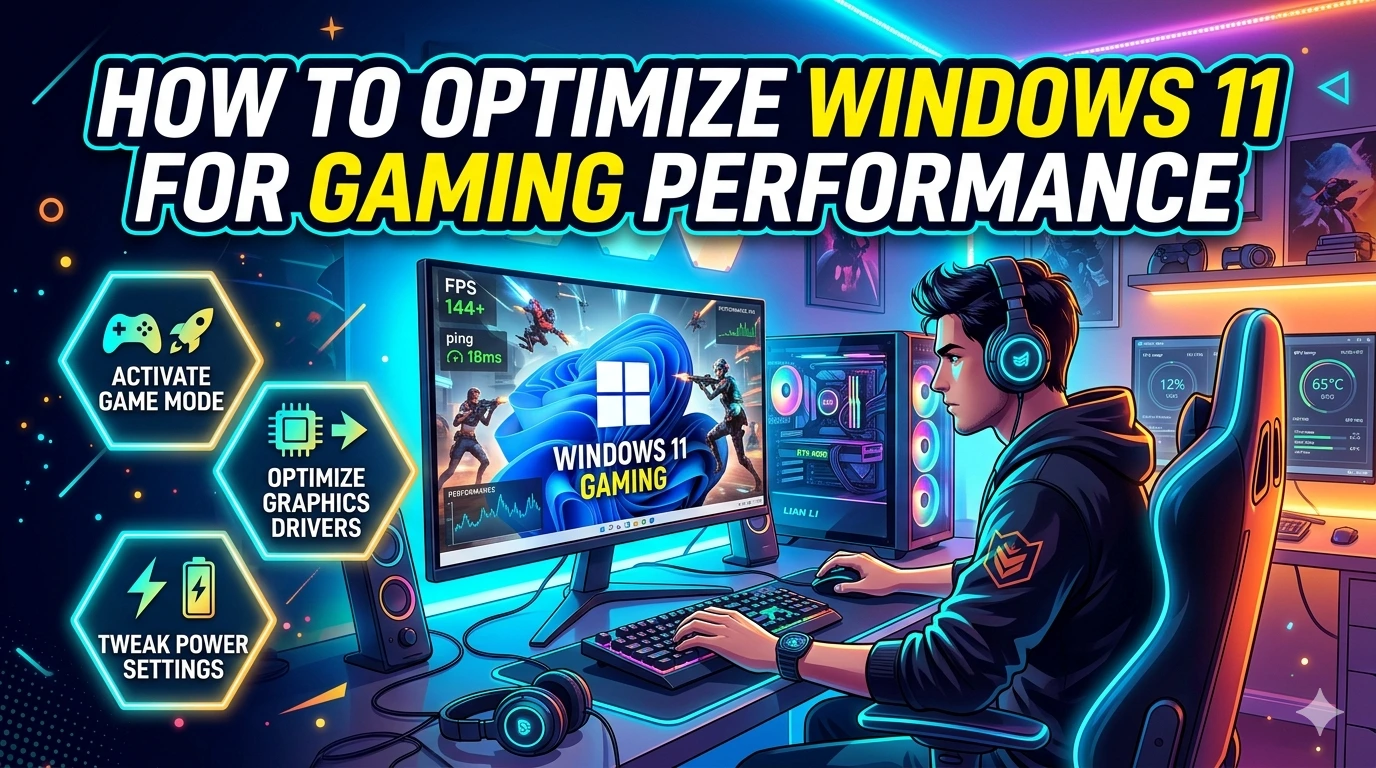
- Game Mode: Prioritizes resources for gaming.
- DirectStorage: Speeds up asset loading from NVMe SSDs.
- Auto HDR: Enhances visuals without heavy performance cost.
- Xbox Game Bar: Provides real‑time performance monitoring.
These features are powerful, but they need proper configuration to deliver maximum benefit.
Why Optimization Is Essential
Even with modern hardware, lag can persist if the system isn’t optimized. For competitive gamers, stuttering means lost matches. For streamers, it means poor viewer experience. For casual players, it means frustration instead of enjoyment. A systematic approach—covering hardware, software, and preventive practices—is the only way to ensure consistently smooth gameplay.
What This Guide Covers
This tutorial will break down:
- Understanding Lag Sources – CPU, GPU, RAM, storage, and network bottlenecks.
- Step‑by‑Step Fixes – Practical solutions like disabling background apps, updating drivers, and adjusting power settings.
- Advanced Solutions – BIOS/UEFI tweaks, GPU control panel adjustments, latency reduction techniques.
- Prevention Tips – How to maintain smooth performance over time.
- Comparisons – How Windows 11 handles lag compared to earlier versions and other platforms.
- FAQ and Conclusion – Addressing common gamer concerns and wrapping up with actionable takeaways.
Setting the Stage
By the end of this guide, you’ll have a complete roadmap to eliminate lag and stuttering in Windows 11. Whether you’re a competitive esports player, a streamer, or a casual gamer, these strategies will help you achieve smoother, more responsive gameplay.
Understanding Lag Sources
To effectively eliminate lag and stuttering, you first need to understand where they come from. Performance issues in Windows 11 gaming are rarely caused by a single factor—they usually result from a combination of hardware, software, and system settings. Let’s break down the most common sources.
1. CPU Bottlenecks
The CPU handles game logic, AI, and background processes.
- Cause: Too many background tasks, insufficient cores/threads, or outdated drivers.
- Impact: Stuttering in CPU‑heavy games (e.g., strategy titles), delayed responses, and inconsistent frame pacing.
2. GPU Bottlenecks
The GPU renders graphics, textures, and effects.
- Cause: Outdated drivers, incorrect settings, or underpowered hardware.
- Impact: Frame drops, poor texture streaming, and lag during graphically demanding scenes.
Windows 11’s DirectX 12 Ultimate improves GPU utilization, but only if properly configured.
3. RAM Limitations
Games require memory to load assets smoothly.
- Cause: Limited RAM or background apps consuming memory.
- Impact: Long load times, stuttering, or crashes when memory runs out.
4. Storage Bottlenecks
Storage speed directly affects how quickly games load assets.
- Cause: Using HDDs instead of SSDs, or SSDs that are nearly full.
- Impact: Texture pop‑ins, delayed asset streaming, and long loading screens.
Windows 11’s DirectStorage reduces these delays, but only works with NVMe SSDs and supported GPUs.
5. Power Settings
Windows defaults to balanced power plans, which may throttle performance.
- Cause: CPU and GPU not running at full potential.
- Impact: Lower frame rates and inconsistent responsiveness.
6. Network Latency
For online gaming, network performance is as critical as hardware.
- Cause: Weak Wi‑Fi, outdated drivers, or background downloads.
- Impact: Lag spikes, rubber‑banding, and delayed inputs.
7. Background Processes
Apps like browsers, cloud sync tools, or update managers consume resources.
- Cause: Too many background tasks running during gameplay.
- Impact: Reduced FPS and slower responsiveness.
8. System Updates and Security Tools
Windows updates and antivirus scans can trigger during gaming sessions.
- Cause: Poorly scheduled updates or aggressive antivirus settings.
- Impact: Sudden frame drops or interruptions mid‑game.
Key Takeaway
Lag and stuttering in Windows 11 gaming stem from multiple sources—CPU, GPU, RAM, storage, power settings, network, and background processes. Identifying which bottleneck affects your system most is the first step toward applying targeted optimizations for smoother gameplay.
How to Reduce Windows 11 Lag and Stuttering During Gameplay – Step‑by‑Step Fixes
Now that we’ve identified the sources of lag, let’s move into practical solutions. These fixes are arranged from basic to advanced so you can apply them progressively until your system delivers smooth, stutter‑free gameplay.
1. Enable Game Mode
Windows 11 includes a built‑in Game Mode that prioritizes system resources for gaming.
Steps:
- Press Win + I → Gaming → Game Mode.
- Toggle it On.
This reduces background interruptions and stabilizes frame rates.
2. Disable Background Apps
Background apps consume CPU and RAM.
Steps:
- Open Settings → Apps → Apps & features.
- Identify apps you don’t need running.
- Disable background permissions.
This frees resources for your game.
3. Update Graphics Drivers
GPU drivers directly affect frame rates and stability.
Steps:
- Visit NVIDIA, AMD, or Intel’s official site.
- Download the latest drivers.
- Install and restart your PC.
Updated drivers often include optimizations for new titles.
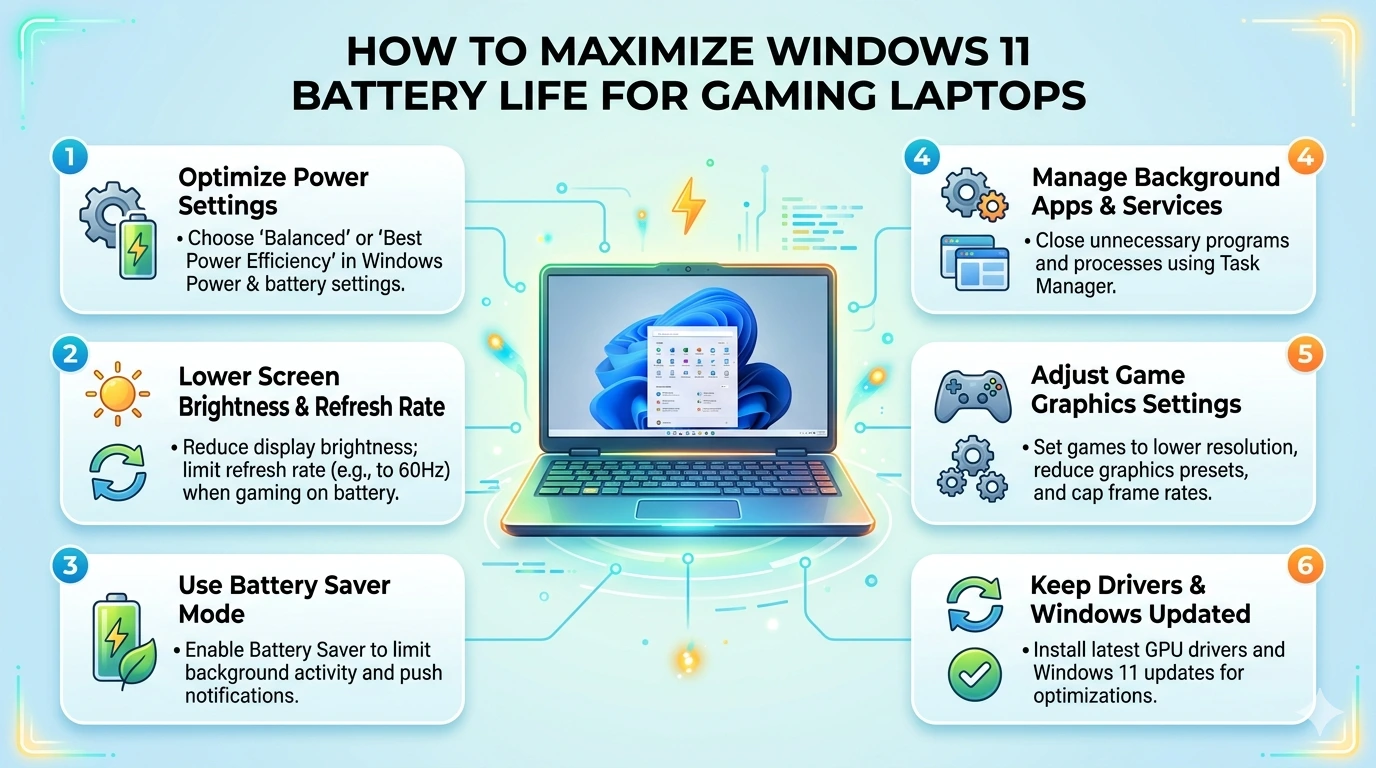
4. Adjust Power Settings
Windows defaults to balanced power plans, which may throttle performance.
Steps:
- Open Control Panel → Power Options.
- Select High Performance or Ultimate Performance.
This ensures your CPU and GPU run at full potential.
5. Optimize Storage
Games load faster on SSDs, especially NVMe drives.
Steps:
- Move games from HDD to SSD.
- Keep SSDs below 80% capacity.
- Run Optimize Drives monthly.
6. Configure GPU Control Panel
Fine‑tune GPU settings for smoother gameplay.
- NVIDIA Control Panel:
- Set Power Management Mode to Prefer Maximum Performance.
- Enable Low Latency Mode.
- AMD Radeon Software:
- Enable Radeon Anti‑Lag.
- Use Radeon Boost for dynamic resolution scaling.
7. Disable Visual Effects
Windows animations consume resources.
Steps:
- Press Win + R, type
sysdm.cpl. - Go to Advanced → Performance Settings.
- Select Adjust for best performance.
8. Manage Startup Programs
Unnecessary startup programs slow down both boot and gaming performance.
Steps:
- Press Ctrl + Shift + Esc to open Task Manager.
- Go to Startup.
- Disable non‑essential apps.
9. Optimize Network for Online Gaming
Stable connectivity is crucial for multiplayer games.
Steps:
- Use wired Ethernet instead of Wi‑Fi.
- Update network drivers.
- Disable background downloads during gameplay.
10. Adjust In‑Game Settings
Sometimes the bottleneck is within the game itself.
- Lower resolution or graphics settings if hardware struggles.
- Enable V‑Sync or G‑Sync for smoother frame pacing.
- Experiment with DLSS (NVIDIA) or FSR (AMD) for higher FPS.
11. Disable Xbox Game Bar (Optional)
While useful for recording, Xbox Game Bar can consume resources.
Steps:
- Open Settings → Gaming → Xbox Game Bar.
- Toggle it Off if you don’t use it.
12. Perform Regular Maintenance
- Run SFC and DISM scans every few months.
- Clear temporary files with Storage Sense.
- Keep antivirus scans scheduled outside gaming hours.
Key Takeaway
These step‑by‑step fixes cover the essentials: enabling Game Mode, updating drivers, optimizing storage, adjusting power settings, and fine‑tuning GPU control panels. Together, they ensure Windows 11 delivers smooth, responsive, and stutter‑free gaming.
Advanced Solutions
If the basic fixes don’t fully eliminate lag, advanced optimizations can help push Windows 11 to its maximum gaming potential. These methods require more technical steps but can significantly improve frame rates, reduce stuttering, and minimize latency.
1. BIOS/UEFI Tweaks
Your system’s firmware directly affects performance.
Steps:
- Enable XMP/DOCP to maximize RAM speed.
- Set boot priority to NVMe SSDs for faster game loading.
- Enable Fast Boot to reduce initialization delays.
- Disable unused controllers (legacy USB, SATA ports not in use).
These tweaks ensure hardware runs at optimal speed before Windows even loads.
2. Overclocking CPU and GPU
Overclocking can deliver noticeable performance gains.
- CPU Overclocking: Improves game logic and AI processing.
- GPU Overclocking: Boosts frame rates in graphically demanding titles.
Tools:
- BIOS/UEFI for CPU overclocking.
- MSI Afterburner, AMD Adrenalin, or NVIDIA Control Panel for GPU tuning.
⚠️ Always monitor temperatures and stability to avoid hardware damage.
3. DirectStorage Configuration
Windows 11’s DirectStorage reduces load times by allowing games to access GPU directly.
Requirements:
- NVMe SSD.
- DirectX 12 Ultimate GPU.
- Supported games.
Steps:
- Keep games installed on NVMe SSDs.
- Ensure GPU drivers are updated.
- Enable DirectStorage in supported titles.
This dramatically reduces loading screens and texture streaming delays.
4. Latency Reduction Techniques
For competitive gaming, latency is as important as FPS.
Steps:
- Use wired Ethernet instead of Wi‑Fi.
- Enable Low Latency Mode in NVIDIA Control Panel or Anti‑Lag in AMD Radeon Software.
- Disable background downloads and cloud sync during gameplay.
- Configure router QoS to prioritize gaming traffic.
5. Registry and Group Policy Tweaks
Advanced users can fine‑tune Windows behavior.
Registry:
- Disable
ClearPageFileAtShutdownto avoid delays. - Adjust
MenuShowDelayfor faster UI responsiveness.
Group Policy:
- Press Win + R, type
gpedit.msc. - Navigate to Computer Configuration → Administrative Templates → System.
- Disable unnecessary startup scripts.
6. GPU Control Panel Advanced Settings
Fine‑tuning GPU settings can yield smoother gameplay.
- NVIDIA:
- Set Power Management Mode to Prefer Maximum Performance.
- Enable Low Latency Mode.
- Adjust Texture Filtering Quality to High Performance.
- AMD:
- Enable Radeon Chill and Anti‑Lag.
- Use Radeon Boost for dynamic resolution scaling.
7. Audio and Peripheral Optimization
Even peripherals can affect performance.
- Disable unused audio devices in Device Manager.
- Update drivers for gaming mice/keyboards.
- Use lightweight headset drivers to reduce CPU load.
8. Advanced Storage Management
- Use NVMe SSDs for games.
- Enable AHCI Mode in BIOS for optimal SSD performance.
- Keep drives defragmented (HDD) or optimized (SSD).
Key Takeaway
Advanced solutions like BIOS/UEFI tweaks, overclocking, DirectStorage, and latency reduction push Windows 11 beyond basic optimization. These methods require careful configuration but deliver substantial gains in frame rates, responsiveness, and load times—especially for competitive and high‑end gaming.
Prevention Tips
Once you’ve optimized your system, the next challenge is keeping it consistently smooth. Lag and stuttering often creep back in over time due to clutter, outdated drivers, or misconfigured settings. Preventive practices ensure your Windows 11 gaming experience stays stable and responsive.
1. Keep Drivers and Windows Updated
- GPU Drivers: Update regularly for performance boosts in new titles.
- Windows Updates: Install promptly to avoid background interruptions.
- Peripheral Drivers: Keep controllers, headsets, and keyboards current.
2. Monitor Background Processes
Apps can silently consume resources.
- Audit Task Manager monthly.
- Disable cloud sync or auto‑update tools during gaming.
- Keep only essential apps active (e.g., Steam, Discord).
3. Maintain Storage Health
Storage directly impacts asset streaming.
- Keep SSDs below 80% capacity.
- Run Optimize Drives monthly.
- Store games on NVMe SSDs for DirectStorage benefits.
4. Protect Against Malware and Bloatware
Unwanted software can silently degrade performance.
- Run weekly scans with Windows Security or Malwarebytes.
- Uninstall trialware or manufacturer utilities you don’t use.
- Avoid mods or tools from unverified sources.
5. Optimize Power Settings
Ensure your system stays in high‑performance mode.
- Verify High Performance or Ultimate Performance is active.
- Recheck after major updates, as defaults may reset.
6. Schedule Regular Maintenance
Consistency is key.
- Run SFC and DISM scans quarterly.
- Clear temporary files with Storage Sense.
- Audit startup programs every few months.
7. Network Hygiene for Online Gaming
Stable connectivity is critical for competitive play.
- Use wired Ethernet whenever possible.
- Restart your router periodically.
- Limit background downloads during sessions.
8. Backup and Restore Points
System changes can sometimes reduce performance unexpectedly.
- Create restore points before major updates.
- Use File History or OneDrive for backups.
- Roll back quickly if performance declines.
Key Takeaway
Preventing lag and stuttering in Windows 11 gaming requires ongoing attention. By updating drivers, monitoring background apps, maintaining storage health, and practicing good network hygiene, you can ensure your system remains optimized. Combined with regular maintenance and backups, these habits create a stable environment where gaming performance stays consistently smooth.
Comparisons
To fully appreciate Windows 11’s strengths and weaknesses in handling lag and stuttering, it helps to compare it with earlier versions of Windows and other operating systems. Each platform has its own approach to resource management, driver support, and gaming optimization.
Windows 7 vs. Windows 11
- Windows 7: Stable and lightweight, but lacked modern gaming features. Lag was often tied to HDD limitations and weaker DirectX support.
- Windows 11: Built for SSDs and modern GPUs, with DirectStorage and Game Mode reducing stuttering and improving frame pacing.
Key Difference: Windows 11 minimizes asset streaming delays compared to Windows 7, but requires modern hardware to fully benefit.
Windows 8/8.1 vs. Windows 11
- Windows 8/8.1: Introduced Fast Startup and better resource management, but its interface and inconsistent driver support frustrated gamers.
- Windows 11: Refines resource allocation with Game Mode and integrates Xbox services seamlessly.
Key Difference: Windows 11 delivers smoother gameplay by balancing usability and performance, unlike Windows 8’s fragmented ecosystem.
Windows 10 vs. Windows 11
- Windows 10: Strong gaming support with DirectX 12, but background updates often caused stuttering mid‑game.
- Windows 11: Enhances Game Mode, integrates Auto HDR, and supports DirectStorage, reducing lag spikes and texture pop‑ins.
Key Difference: Windows 11 reduces interruptions and improves consistency compared to Windows 10, though both share similar foundations.
Windows 11 vs. macOS
- macOS: Known for stability and smooth UI, but limited in gaming due to fewer supported titles and weaker GPU options.
- Windows 11: Supports a vast library of games, advanced GPUs, and technologies like ray tracing.
Key Difference: macOS minimizes system‑level stuttering but lacks the breadth of gaming support Windows 11 offers.
Windows 11 vs. Linux
- Linux: Lightweight distributions can deliver fast performance, but gaming relies on compatibility layers like Proton. Stuttering may occur due to translation overhead.
- Windows 11: Native support for most titles, plus Xbox Game Pass integration.
Key Difference: Linux can be efficient, but Windows 11 provides broader compatibility and smoother native performance for mainstream gamers.
Why Comparisons Matter
By contrasting Windows 11 with earlier versions and other platforms, we see that lag and stuttering have steadily decreased thanks to better resource management and hardware integration. Windows 11’s strengths lie in modern gaming features, while its weaknesses stem from background processes and user‑side misconfigurations.
Key Takeaway
Windows 11 is the most gaming‑ready version yet, offering smoother frame pacing and reduced stuttering compared to its predecessors. Against macOS and Linux, it stands out for compatibility and breadth of support, making it the dominant choice for gamers seeking consistent, lag‑free performance.
FAQ
Even after applying fixes and advanced optimizations, gamers often have lingering questions about lag and stuttering in Windows 11. Here are clear answers to the most common concerns.
1. Why does my game stutter even with high FPS?
Stuttering can occur when frames are delivered inconsistently. Even if FPS is high, poor frame pacing caused by CPU/GPU synchronization issues, background tasks, or driver conflicts can create visible stutter.
2. Does Game Mode completely eliminate lag?
Game Mode helps by prioritizing resources, but it doesn’t solve every issue. It reduces background interruptions, yet hardware bottlenecks or network latency may still cause lag.
3. Should I disable the Xbox Game Bar?
If you don’t use it for recording or monitoring, disabling it can free up resources. However, if you stream or capture gameplay, keep it enabled—it’s optimized for Windows 11.
4. Is DirectStorage effective for reducing stuttering?
Yes, but only with NVMe SSDs and supported GPUs. DirectStorage reduces asset streaming delays, which helps prevent texture pop‑ins and micro‑stutters in supported titles.
5. How much RAM do I need to avoid stuttering?
- 8 GB: Minimum for casual gaming.
- 16 GB: Recommended for most modern titles.
- 32 GB+: Ideal for AAA games, multitasking, or streaming.
Insufficient RAM often causes stuttering when the system swaps data to disk.
6. Can antivirus software cause lag?
Yes. Background scans or aggressive real‑time protection can consume CPU cycles. Configure antivirus to avoid scanning during gameplay or use lightweight options like Windows Security.
7. Why does stuttering increase after updates?
Major Windows updates may reset performance settings or introduce driver conflicts. Re‑enable Game Mode, check power plans, and update GPU drivers to restore smoothness.
8. Is Wi‑Fi good enough for online gaming?
Wi‑Fi can work for casual play, but competitive gamers should use wired Ethernet. Wired connections reduce latency and packet loss, minimizing lag spikes.
9. Should I overclock to reduce stuttering?
Overclocking can help, but it’s not always necessary. If stuttering is caused by background tasks or poor optimization, overclocking won’t fix it. Use it only if your hardware is stable and well‑cooled.
10. What’s the ultimate fix if nothing works?
If lag persists after all optimizations, a clean reinstall of Windows 11 may be necessary. This removes deep system clutter and restores default performance settings.
Key Takeaway
Lag and stuttering in Windows 11 can be minimized with proper configuration: enabling Game Mode, updating drivers, using NVMe SSDs, managing background processes, and maintaining stable networks. Advanced tweaks like DirectStorage and latency reduction provide additional gains, but preventive habits are essential for long‑term smoothness.
Conclusion
Lag and stuttering are among the most frustrating issues gamers face, but with the right optimizations, Windows 11 can deliver consistently smooth performance. This guide has walked through every layer of the problem—from identifying bottlenecks to applying fixes, advanced tweaks, and preventive practices.
Summarizing the Fixes
We started with step‑by‑step solutions:
- Enabling Game Mode to prioritize resources.
- Disabling background apps and startup programs.
- Updating GPU drivers and Windows itself.
- Adjusting power settings to High Performance.
- Moving games to SSDs or NVMe drives for faster asset streaming.
- Fine‑tuning GPU control panels for low latency and maximum performance.
Then we explored advanced solutions:
- BIOS/UEFI tweaks like enabling XMP and Fast Boot.
- Safe CPU/GPU overclocking for extra responsiveness.
- Configuring DirectStorage for faster loading and reduced stuttering.
- Latency reduction techniques such as wired Ethernet and router QoS.
- Registry and Group Policy adjustments for leaner system behavior.
Preventive Practices
Optimization isn’t a one‑time task—it requires ongoing attention. Preventive strategies include:
- Regular driver and Windows updates.
- Monitoring background processes.
- Maintaining SSD health and storage capacity.
- Running malware scans and removing bloatware.
- Scheduling system maintenance (SFC, DISM, storage cleanup).
- Keeping networks stable and minimizing background downloads.
These habits ensure your system remains smooth over time.
Comparisons and Context
Compared to earlier versions, Windows 11 is the most gaming‑ready OS yet. It refines features introduced in Windows 10, adds Auto HDR and DirectStorage, and integrates Xbox services seamlessly. Against macOS and Linux, Windows 11 stands out for its vast compatibility and support for cutting‑edge GPUs, making it the dominant choice for gamers seeking lag‑free performance.
Final Thoughts
Windows 11 offers powerful tools to reduce lag and stuttering, but the responsibility lies with the user to configure and maintain the system. By applying the fixes, advanced solutions, and preventive practices outlined in this guide, you can transform your PC into a consistently smooth gaming machine.
Whether you’re a casual player, a competitive esports enthusiast, or a streamer balancing performance with content creation, these strategies ensure Windows 11 delivers the responsiveness you need. With the right setup, your system won’t just run games—it will provide a seamless, immersive experience free from lag and stuttering.