
Windows 11 represents a major step forward in Microsoft’s operating system, combining a sleek, modern design with enhanced functionality. While its default interface is visually appealing, the true power of Windows 11 lies in its customization options. Personalization is not simply about aesthetics—it’s about shaping your digital workspace to improve focus, efficiency, and comfort.
The redesigned taskbar, centered Start Menu, and refreshed icons may feel intuitive to some users, but others prefer a more traditional setup. Fortunately, Windows 11 allows you to adapt these elements. From repositioning the taskbar and adjusting Start Menu layouts to applying themes and wallpapers, customization ensures that your PC feels natural and supports your workflow.
Customization directly influences productivity. A cluttered or rigid interface can slow you down, while a tailored environment accelerates task completion. Features such as virtual desktops, widgets, and quick settings can be arranged to prioritize essential tools, reduce distractions, and streamline multitasking. For professionals, students, and creatives alike, this flexibility ensures that the system adapts to their unique needs.
Accessibility is another key advantage. Windows 11 integrates options like text scaling, color filters, and voice input, making it easier for users to personalize the system to match their physical or cognitive requirements. These adjustments enhance usability and reduce fatigue during long working hours.
Beyond functionality, personalization fosters motivation. A workspace that reflects your personality—through themes, wallpapers, and icon arrangements—creates a sense of ownership and comfort. Just as a well‑organized office inspires productivity, a customized digital environment encourages focus and creativity.
Ultimately, customization in Windows 11 is about aligning technology with your goals. This guide will explore practical steps to personalize your PC, helping you transform Windows 11 into a platform that not only looks the way you want but also works the way you need.
Here’s Potongan 2 – Understanding Customization Options (~600 words, English) for your guide:
Understanding Customization Options
Windows 11 offers a wide range of customization features designed to help users create a workspace that feels natural, efficient, and motivating. Understanding these options is the first step toward building a personalized environment that enhances productivity.
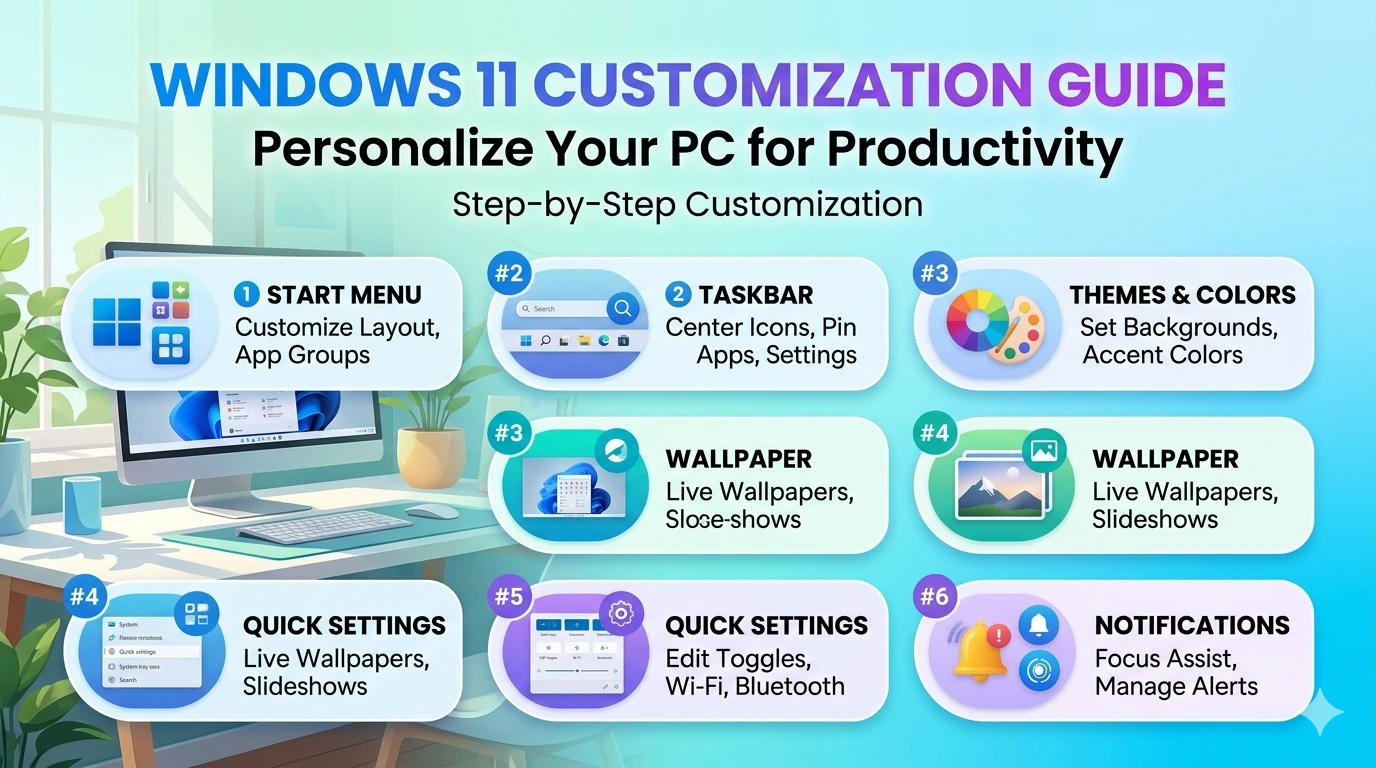
1. Start Menu
The Start Menu is the central hub for applications and shortcuts. In Windows 11, it has a simplified, centered design. Users can customize pinned apps, rearrange tiles, and adjust recommended items. By tailoring the Start Menu, you ensure that frequently used tools are always accessible, reducing the time spent searching for programs.
2. Taskbar
The taskbar is one of the most visible elements of the interface. Windows 11 allows you to reposition it (centered or left‑aligned), adjust icon sizes, and manage system tray visibility. You can also choose which apps appear permanently on the taskbar. A well‑organized taskbar minimizes clutter and provides quick access to essential functions.
3. Themes and Wallpapers
Visual customization plays a significant role in creating a comfortable workspace. Windows 11 includes built‑in themes that adjust colors, sounds, and wallpapers. Users can also upload personal images or download themes from the Microsoft Store. Choosing a theme that reflects your style can make your environment more inspiring and reduce visual fatigue.
4. Widgets
Widgets provide at‑a‑glance information such as weather, news, calendar events, and stock updates. They can be customized to show relevant content, ensuring that you stay informed without opening multiple apps. For productivity, widgets can serve as a quick dashboard for daily priorities.
5. Quick Settings
Quick Settings consolidate essential controls like Wi‑Fi, Bluetooth, brightness, and volume. You can personalize which toggles appear, making it easier to adjust system functions without navigating deep menus. This saves time and streamlines multitasking.
6. Accessibility Features
Windows 11 integrates accessibility options that can be customized to meet individual needs. Features include text scaling, high‑contrast themes, color filters, and voice input. These adjustments ensure that the system adapts to you, enhancing comfort and usability during long working sessions.
7. Virtual Desktops
Virtual desktops allow you to create separate workspaces for different tasks. For example, one desktop can be dedicated to professional projects, while another is reserved for personal use. Customizing virtual desktops with unique wallpapers and app layouts helps maintain focus and organization.
Why Customization Matters
Each of these options contributes to a more personalized and efficient computing experience. By understanding and applying them, you can design a Windows 11 environment that reduces distractions, accelerates workflows, and reflects your personal style.
Windows 11 Customization Guide: Personalize Your PC for Productivity – Step‑by‑Step Customization
Now that you understand the main customization options available in Windows 11, it’s time to explore how to apply them in practice. This section provides detailed, step‑by‑step instructions to help you personalize your PC for maximum productivity.
1. Setting Up Virtual Desktops
Virtual desktops allow you to separate tasks into different workspaces.
Steps:
- Press Win + Tab to open Task View.
- Click New Desktop in the top‑left corner.
- Assign specific apps to each desktop (e.g., work apps on one, entertainment on another).
- Right‑click a desktop thumbnail to rename or customize it.
Tip: Use unique wallpapers for each desktop to visually distinguish them.
2. Organizing File Explorer & Quick Access
A cluttered File Explorer slows down productivity.
Steps:
- Open File Explorer and navigate to frequently used folders.
- Right‑click and select Pin to Quick Access.
- Remove unnecessary shortcuts by right‑clicking and choosing Unpin.
- Customize folder views (list, details, icons) depending on your workflow.
Tip: Use OneDrive integration to sync important folders across devices.
3. Configuring Notifications & Focus Assist
Notifications can be helpful but also distracting.
Steps:
- Open Settings > System > Notifications.
- Toggle off unnecessary app notifications.
- Go to Focus Assist to set rules (e.g., only priority notifications during work hours).
- Customize priority list to include essential apps like email or calendar.
Tip: Schedule Focus Assist to activate automatically during meetings.
4. Personalizing Lock Screen & Sign‑in Options
Your lock screen can be both functional and inspiring.
Steps:
- Go to Settings > Personalization > Lock Screen.
- Choose a background (picture, slideshow, or Windows Spotlight).
- Add widgets like calendar or email to display useful info.
- Under Sign‑in Options, enable Windows Hello (face, fingerprint, or PIN) for faster access.
Tip: Use motivational wallpapers or productivity quotes to set the tone for your day.
5. Customizing Start Menu Layout
The Start Menu is your launchpad.
Steps:
- Open Settings > Personalization > Start.
- Toggle options like “Show recently added apps” or “Show most used apps.”
- Pin essential apps by right‑clicking and selecting Pin to Start.
- Rearrange pinned apps into logical groups (e.g., Work, Entertainment, Tools).
Tip: Keep only essential apps pinned to reduce clutter.
6. Optimizing Taskbar for Productivity
The taskbar is always visible, so make it work for you.
Steps:
- Go to Settings > Personalization > Taskbar.
- Choose alignment (center or left).
- Enable/disable system tray icons (e.g., Bluetooth, Wi‑Fi).
- Pin frequently used apps for one‑click access.
Tip: Use taskbar shortcuts for apps you open daily, like browsers or project tools.
7. Enhancing Accessibility Settings
Accessibility features improve comfort and usability.
Steps:
- Open Settings > Accessibility.
- Adjust text size and display scaling.
- Enable color filters or high‑contrast themes if needed.
- Activate voice typing with Win + H for hands‑free input.
Tip: Customize keyboard shortcuts to reduce repetitive strain.
8. Using Widgets as a Productivity Dashboard
Widgets provide quick updates without opening apps.
Steps:
- Click the Widgets icon on the taskbar.
- Customize feed by selecting topics (news, weather, calendar, tasks).
- Rearrange widgets to prioritize productivity tools.
Tip: Add a calendar widget to keep deadlines visible at all times.
9. Quick Settings Customization
Quick Settings save time when adjusting system controls.
Steps:
- Click the Quick Settings panel (Wi‑Fi/volume icon).
- Click the pencil icon to edit.
- Add/remove toggles like Bluetooth, Night Light, or Airplane Mode.
- Rearrange toggles for faster access.
Tip: Keep brightness and Wi‑Fi at the top for quick adjustments.
10. Syncing Across Devices
Consistency across devices boosts efficiency.
Steps:
- Go to Settings > Accounts > Sync your settings.
- Enable sync for themes, passwords, and language preferences.
- Ensure OneDrive is active for file synchronization.
Tip: This ensures seamless transitions between desktop, laptop, and tablet.
Final Thoughts on Step‑by‑Step Customization
By following these steps, you can transform Windows 11 into a workspace tailored to your needs. Each customization—whether visual, functional, or accessibility‑focused—contributes to a smoother, more productive experience. The key is to balance aesthetics with efficiency, ensuring that your PC not only looks good but also supports your daily goals.
Advanced Tweaks
For users who want deeper control over their Windows 11 environment, advanced customization options go beyond the built‑in settings. These tweaks allow you to refine performance, aesthetics, and workflow in ways that standard personalization cannot. While some require caution—such as registry edits—they can significantly enhance productivity when applied correctly.
1. Registry Edits for Fine‑Grained Control
The Windows Registry is a database that stores configuration settings. By editing it, you can unlock hidden customization features.
Examples:
- Taskbar Size Adjustment: Navigate to
HKEY_CURRENT_USER\Software\Microsoft\Windows\CurrentVersion\Explorer\Advancedand modify theTaskbarSivalue (0 = small, 1 = medium, 2 = large). - Disable Lock Screen Ads: Go to
HKEY_LOCAL_MACHINE\SOFTWARE\Policies\Microsoft\Windows\CloudContentand setDisableWindowsSpotlightFeaturesto 1. - Classic Context Menu: Under
HKEY_CURRENT_USER\Software\Classes\CLSID, create a new key to restore the Windows 10‑style right‑click menu.
Tip: Always back up the registry before making changes.
2. Group Policy Customization
Group Policy Editor (available in Pro and Enterprise editions) provides advanced configuration options.
Examples:
- Disable Telemetry: Navigate to
Computer Configuration > Administrative Templates > Windows Components > Data Collectionand limit diagnostic data. - Control Updates: Set policies to delay or schedule Windows updates, preventing interruptions during work.
- Restrict Background Apps: Manage which apps can run in the background to save resources.
Tip: Group Policy is ideal for professionals managing multiple PCs.
3. Third‑Party Customization Tools
Several tools extend Windows 11’s personalization capabilities.
- PowerToys: Offers utilities like FancyZones (custom window layouts), keyboard remapping, and file renaming.
- Start11: Restores classic Start Menu layouts and adds advanced taskbar controls.
- Rainmeter: Enables highly customizable desktop widgets and skins for productivity dashboards.
- Winaero Tweaker: Provides access to hidden system settings without manual registry edits.
Tip: Choose lightweight tools to avoid performance overhead.
4. Performance vs. Personalization Balance
Customization should not compromise system speed.
Best Practices:
- Avoid overly complex themes or animated wallpapers that consume GPU resources.
- Limit startup programs via Task Manager > Startup.
- Use lightweight widgets instead of resource‑heavy dashboards.
- Regularly clean temporary files with Storage Sense or third‑party cleaners.
Tip: Balance aesthetics with efficiency—prioritize productivity over visual novelty.
5. Automation with Scripts
Advanced users can automate customization with PowerShell or batch scripts.
Examples:
- Create scripts to set default wallpapers across multiple desktops.
- Automate enabling/disabling Focus Assist during work hours.
- Configure scheduled tasks to back up personalization settings.
Tip: Scripts save time when managing multiple PCs or repetitive tasks.
6. Custom Keyboard Shortcuts
Windows 11 supports shortcut customization through PowerToys or registry edits.
Examples:
- Assign shortcuts for launching specific apps.
- Create hotkeys for switching virtual desktops.
- Map unused keys to productivity functions.
Tip: Efficient shortcuts reduce reliance on mouse navigation.
7. Advanced Taskbar Tweaks
Beyond basic alignment, advanced tweaks can transform the taskbar.
Examples:
- Use Start11 to move the taskbar to the top of the screen.
- Enable transparent or blurred taskbar effects with third‑party tools.
- Add custom toolbars for quick access to folders or scripts.
Tip: Keep the taskbar minimal—only essential apps and functions should remain visible.
8. Deep Accessibility Customization
Accessibility features can be fine‑tuned for productivity.
Examples:
- Use voice commands with Windows Speech Recognition for hands‑free control.
- Customize magnifier settings for detailed design work.
- Combine high‑contrast themes with custom color filters for eye comfort.
Tip: Accessibility tweaks benefit all users, not just those with specific needs.
9. Cloud Integration & Sync
Advanced customization extends to cloud services.
Steps:
- Sync personalization settings across devices via Settings > Accounts > Sync.
- Use OneDrive to back up wallpapers, themes, and desktop layouts.
- Configure cloud profiles for consistent experiences across multiple PCs.
Tip: Cloud sync ensures continuity when switching between devices.
10. Security‑Focused Customization
Productivity depends on a secure environment.
Examples:
- Customize Windows Defender settings for real‑time protection.
- Use BitLocker to encrypt drives.
- Configure firewall rules for app‑specific access.
Tip: Security customization prevents disruptions from malware or unauthorized access.
Final Thoughts on Advanced Tweaks
Advanced customization in Windows 11 empowers users to go beyond surface‑level personalization. Registry edits, Group Policy adjustments, and third‑party tools unlock deeper control, while automation and shortcuts streamline workflows. The key is balance: personalization should enhance productivity without sacrificing performance or stability. By applying these advanced tweaks carefully, you can transform Windows 11 into a highly efficient, secure, and personalized productivity platform.
Troubleshooting & Prevention
Even with the wide range of customization options in Windows 11, users may encounter issues that disrupt their workflow. Troubleshooting these problems and applying preventive measures ensures that your personalized setup remains stable, efficient, and reliable.
1. Common Issues with Themes and Widgets
Themes not applying correctly:
- Sometimes themes fail to load or revert to defaults. This can be caused by corrupted files or conflicts with third‑party tools.
Solution: - Go to Settings > Personalization > Themes and reapply the theme.
- If the issue persists, download a fresh theme from the Microsoft Store.
Widgets not updating:
- Widgets may freeze or fail to display current information.
Solution: - Restart the Widgets process via Task Manager.
- Ensure your Microsoft account is synced, as widgets rely on cloud integration.
2. Resetting Personalization Settings
If customization changes cause instability, resetting settings can restore functionality.
Steps:
- Open Settings > Personalization.
- Select Themes and apply the default Windows theme.
- Reset taskbar and Start Menu layouts under Taskbar Settings and Start Settings.
Tip: Resetting does not delete files but reverts the interface to a stable baseline.
3. Backup and Restore Customization Profiles
To avoid losing your personalized setup, create backups.
Steps:
- Use Windows Backup to save system settings.
- Sync personalization preferences via Settings > Accounts > Sync your settings.
- Export registry keys related to customization for advanced backups.
Tip: Store backups in OneDrive for easy restoration across devices.
4. Preventing Performance Issues
Customization can sometimes slow down your PC if not managed properly.
Best Practices:
- Avoid resource‑heavy animated wallpapers.
- Limit startup apps via Task Manager > Startup.
- Regularly clear cache and temporary files using Storage Sense.
- Monitor system performance with Task Manager to identify apps consuming excessive resources.
5. Handling Taskbar and Start Menu Errors
Taskbar icons not responding:
- Restart Windows Explorer via Task Manager.
Start Menu not opening: - Run the Start Menu troubleshooter (available from Microsoft support).
Tip: Keep Windows updated, as many taskbar and Start Menu bugs are patched in updates.
6. Troubleshooting Accessibility Features
Text scaling issues:
- If scaling causes apps to appear blurry, adjust DPI settings under Display Settings.
Voice input not working: - Check microphone permissions under Settings > Privacy & Security > Microphone.
Tip: Test accessibility features after major updates, as settings may reset.
7. Preventing Customization Conflicts
Third‑party tools can sometimes conflict with Windows updates.
Best Practices:
- Update customization tools regularly.
- Avoid using multiple tools that modify the same element (e.g., taskbar).
- Create a restore point before applying major tweaks.
8. Security Considerations
Customization should not compromise security.
Tips:
- Avoid downloading themes or widgets from unverified sources.
- Use Windows Defender to scan files before applying them.
- Keep BitLocker enabled to protect data even if customization tools are installed.
9. When to Use System Restore
If customization causes severe instability:
Steps:
- Open Control Panel > Recovery > Open System Restore.
- Select a restore point created before the customization changes.
- Confirm and restart your PC.
Tip: System Restore is a last resort but can quickly recover stability.
Final Thoughts on Troubleshooting & Prevention
Customization in Windows 11 enhances productivity, but it requires careful management. By learning how to troubleshoot common issues, reset personalization settings, and back up your configurations, you ensure that your PC remains reliable. Preventive measures—such as balancing performance, avoiding conflicts, and maintaining security—help sustain a smooth, personalized environment. With these strategies, you can enjoy the benefits of customization without sacrificing stability or efficiency.
Comparison & Productivity Impact
Customization has always been a defining feature of Windows, but Windows 11 takes personalization further than its predecessor, Windows 10. Understanding the differences between the two systems helps highlight how customization directly impacts productivity in real‑world scenarios.
1. Windows 11 vs. Windows 10 Customization
Start Menu and Taskbar:
- Windows 10 offered a tile‑based Start Menu with live updates, which some users found cluttered. Windows 11 simplifies this with pinned apps and a cleaner layout. The taskbar is centered by default, but can be realigned, offering a modern look while retaining flexibility.
- Productivity Impact: A cleaner Start Menu reduces distractions, while taskbar alignment options allow users to maintain familiar workflows.
Themes and Visuals:
- Windows 10 supported themes but lacked the depth of integration found in Windows 11. The newer OS offers dynamic wallpapers, improved dark mode, and more cohesive design language.
- Productivity Impact: Consistent visuals reduce eye strain and create a more comfortable environment for long work sessions.
Widgets vs. Live Tiles:
- Windows 10 relied on live tiles for quick updates, but they often felt overwhelming. Windows 11 replaces them with widgets, which are customizable and less intrusive.
- Productivity Impact: Widgets provide at‑a‑glance information without clutter, helping users stay informed while maintaining focus.
Virtual Desktops:
- While Windows 10 introduced virtual desktops, Windows 11 enhances them with unique wallpapers and layouts for each workspace.
- Productivity Impact: This allows clearer separation between personal and professional tasks, improving organization and focus.
Accessibility:
- Both systems include accessibility features, but Windows 11 expands them with improved voice typing, better magnifier controls, and streamlined settings.
- Productivity Impact: Enhanced accessibility ensures that more users can tailor the system to their needs, reducing barriers to efficiency.
2. Real‑World Productivity Benefits
For Professionals:
Customizing taskbars, Start Menus, and virtual desktops allows professionals to streamline workflows. Quick access to essential apps and organized desktops reduces wasted time switching between tasks.
For Students:
Widgets and Focus Assist help students manage deadlines and minimize distractions. Custom themes and layouts create study environments that encourage concentration.
For Creatives:
Themes, wallpapers, and accessibility features provide visual inspiration while reducing fatigue. Rainmeter or PowerToys integration further enhances creative workflows with custom dashboards and layouts.
For Remote Workers:
Cloud sync ensures consistent customization across devices, making transitions between home and office seamless. Personalized notifications and taskbar setups help balance professional and personal responsibilities.
3. Psychological Impact of Customization
Beyond technical efficiency, personalization influences motivation and engagement. A workspace that reflects personal style fosters ownership and comfort. Just as a well‑organized office inspires productivity, a customized digital environment encourages focus and creativity.
4. Balancing Customization and Performance
While customization enhances productivity, it must be balanced with performance. Overuse of resource‑heavy themes or widgets can slow down the system. Windows 11’s streamlined design helps mitigate this, but users should prioritize efficiency over novelty.
Final Thoughts on Comparison & Productivity Impact
Compared to Windows 10, Windows 11 offers a more refined, user‑friendly approach to customization. Its cleaner design, enhanced widgets, and improved accessibility features directly contribute to productivity. By tailoring the system to individual needs, users can create environments that reduce distractions, improve focus, and inspire creativity. Ultimately, customization in Windows 11 is not just about aesthetics—it’s a strategic tool for achieving efficiency and success in everyday tasks.
FAQ
To make this guide more practical and SEO‑optimized, here are frequently asked questions (FAQs) about Windows 11 customization, with clear and concise answers.
Q1: How do I customize the Start Menu in Windows 11?
You can personalize the Start Menu by right‑clicking apps and selecting Pin to Start, rearranging pinned apps into groups, and toggling options under Settings > Personalization > Start. This ensures quick access to essential tools while reducing clutter.
Q2: Can I move the taskbar in Windows 11?
Yes. By default, the taskbar is centered, but you can realign it to the left via Settings > Personalization > Taskbar > Taskbar behaviors. Third‑party tools like Start11 also allow advanced positioning, such as moving the taskbar to the top.
Q3: How do I change themes and wallpapers?
Go to Settings > Personalization > Themes to select built‑in themes or download new ones from the Microsoft Store. Wallpapers can be customized under Background, where you can choose a picture, slideshow, or solid color.
Q4: What are widgets, and how do I use them?
Widgets provide at‑a‑glance information such as weather, news, and calendar events. Access them via the Widgets icon on the taskbar. You can customize the feed by selecting topics and rearranging widgets to prioritize productivity tools.
Q5: How do I set up virtual desktops?
Press Win + Tab and select New Desktop. You can assign apps to different desktops, rename them, and even apply unique wallpapers. This helps separate personal and professional tasks for better organization.
Q6: Can customization affect system performance?
Yes, heavy themes, animated wallpapers, or resource‑intensive widgets may slow down your PC. To balance performance, use lightweight themes, limit startup apps, and monitor resource usage with Task Manager.
Q7: How do I reset personalization settings if something goes wrong?
Navigate to Settings > Personalization and apply the default Windows theme. You can also reset taskbar and Start Menu layouts. For severe issues, use System Restore to revert to a stable configuration.
Q8: Are there advanced customization options beyond built‑in settings?
Yes. Advanced users can edit the registry, use Group Policy, or install third‑party tools like PowerToys, Rainmeter, or Winaero Tweaker. These unlock deeper personalization features, but always back up your system before applying changes.
Q9: How do I sync customization across devices?
Enable sync via Settings > Accounts > Sync your settings. This ensures themes, passwords, and preferences are consistent across desktops, laptops, and tablets. Using OneDrive also helps maintain uniform file organization.
Q10: Is customization safe?
Customization is safe when using built‑in settings or trusted tools. Avoid downloading themes or widgets from unverified sources, and always keep Windows Defender active to protect against malware.
Final Note
These FAQs address the most common concerns about Windows 11 customization. By applying these tips, you can personalize your PC confidently, ensuring both productivity and stability.
Conclusion
Windows 11 is more than just a modern operating system—it is a platform designed to adapt to the unique needs of its users. Through customization, you can transform the default interface into a workspace that reflects your personality, supports your workflow, and enhances productivity.
From the basics of adjusting the Start Menu and taskbar to advanced tweaks using registry edits and third‑party tools, Windows 11 offers flexibility at every level. Beginners can quickly personalize themes and layouts, while power users can dive deeper into automation, accessibility, and cloud integration. This scalability ensures that customization is not limited to a specific group of users; it is accessible to everyone.
The impact of personalization extends beyond aesthetics. A tailored environment reduces distractions, accelerates task completion, and fosters motivation. For professionals, it means streamlined workflows; for students, a focused study space; for creatives, an inspiring digital canvas. Even accessibility features contribute to long‑term efficiency by ensuring comfort and usability for diverse needs.
Equally important is the balance between customization and performance. While personalization enhances productivity, it should never compromise system stability. Preventive measures such as backing up settings, avoiding resource‑heavy themes, and keeping tools updated ensure that your customized environment remains reliable.
Compared to Windows 10, Windows 11 delivers a more refined and user‑friendly approach to personalization. Its cleaner design, improved widgets, and enhanced accessibility features highlight Microsoft’s commitment to creating a system that adapts to users rather than forcing users to adapt to it.
Ultimately, customization in Windows 11 is about aligning technology with your goals. By investing time in tailoring your PC, you create a workspace that not only looks the way you want but also functions in a way that empowers you. Whether you are working, studying, or creating, personalization transforms Windows 11 into a productivity hub that is uniquely yours.