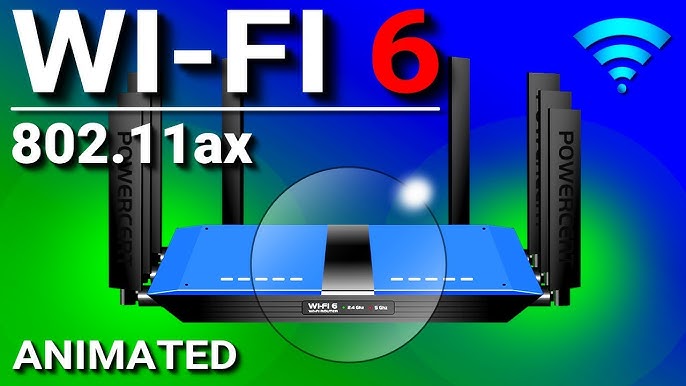
Wireless networking has evolved rapidly over the past decade, driven by the growing demand for faster speeds, lower latency, and better performance across multiple connected devices. As homes and businesses become increasingly dependent on internet connectivity, older standards like Wi-Fi 5 (802.11ac) are beginning to show their limitations.
Before diving into performance benchmarks and real-world testing, it’s important to understand the foundation of the latest wireless standard—Wi-Fi 6 (802.11ax). This new generation of Wi-Fi introduces a range of technologies designed to dramatically improve throughput, efficiency, and reliability. With theoretical speeds approaching 10Gbps—compared to approximately 3Gbps for Wi-Fi 5—Wi-Fi 6 represents a significant leap forward.
In this comprehensive guide, we’ll explore how Wi-Fi 6 works, the technologies behind its performance gains, and why it is quickly becoming the standard for modern wireless networks.
What Is Wi-Fi 6?
Wi-Fi 6, also known as 802.11ax, is the sixth generation of wireless networking technology. It builds upon previous standards by introducing innovations that enhance speed, capacity, and efficiency.
Why Wi-Fi 6 Matters
The modern digital environment includes:
- Multiple devices per household
- High-definition streaming
- Online gaming
- Smart home ecosystems
- Cloud computing and remote work
Wi-Fi 6 is specifically designed to handle these demands with improved performance across the board.
Speed Breakthrough: Approaching 10Gbps
One of the most talked-about features of Wi-Fi 6 is its speed.
Comparing Wi-Fi Generations
- Wi-Fi 5 (802.11ac): ~3Gbps maximum
- Wi-Fi 6 (802.11ax): Up to ~9.6–10Gbps
While these are theoretical maximums, even real-world speeds see a significant boost.
What This Means for Users
- Faster downloads and uploads
- Reduced buffering
- Seamless 4K and 8K streaming
- Improved cloud performance
Key Technologies Powering Wi-Fi 6
Wi-Fi 6 achieves its performance improvements through several advanced technologies.
1. OFDMA (Orthogonal Frequency Division Multiple Access)
OFDMA allows a single channel to serve multiple devices simultaneously.
Benefits:
- Increased efficiency
- Lower latency
- Better performance in crowded networks
Instead of waiting for its turn, each device gets a portion of the channel.
2. MU-MIMO Enhancements
Multi-User Multiple Input Multiple Output (MU-MIMO) has been upgraded in Wi-Fi 6.
Improvements:
- Supports more simultaneous connections
- Works for both uploading and downloading
- Improves network capacity
3. 1024-QAM for Higher Data Rates
Wi-Fi 6 uses 1024-QAM modulation to pack more data into each signal.
Result:
- Up to 25% higher throughput
- Faster data transmission
Improved Use of Radio Frequencies
One of the most important advancements in Wi-Fi 6 is how it uses radio frequencies.
Utilizing Previously Underused Spectrum
Wi-Fi 6 optimizes both the 2.4GHz and 5GHz bands.
2.4GHz Improvements:
- Better range and penetration
- Faster speeds than previous standards
- Improved reliability in crowded environments
5GHz Enhancements:
- Higher throughput
- Reduced interference
- Better performance for high-bandwidth tasks
Faster 2.4GHz Performance
In previous Wi-Fi standards, the 2.4GHz band was often slower and more congested. Wi-Fi 6 changes that.
Why This Matters
- Many IoT devices rely on 2.4GHz
- Better signal strength through walls
- More stable connections for distant devices
This makes Wi-Fi 6 ideal for smart homes and large spaces.
Advanced Bandwidth Management
Wi-Fi 6 introduces refined bandwidth management techniques that improve how data is distributed across devices.
Smarter Resource Allocation
Routers can now:
- Prioritize important traffic
- Allocate bandwidth dynamically
- Reduce congestion
Enhanced Quality of Service (QoS)
Quality of Service (QoS) is a critical feature for managing network traffic.
What QoS Does
QoS allows certain types of data to be prioritized over others.
Improvements in Wi-Fi 6
- More precise traffic control
- Better support for real-time applications
- Reduced lag for gaming and video calls
Example
A Wi-Fi 6 router can prioritize video conferencing traffic over background downloads, ensuring smooth communication.
Benefits of Wi-Fi 6 in Real-World Scenarios
1. Smart Homes
- Supports dozens of connected devices
- Ensures stable connections for IoT devices
2. Gaming
- Lower latency
- Reduced lag
- Faster downloads
3. Streaming
- Smooth 4K and 8K playback
- No buffering interruptions
4. Work-from-Home
- Reliable video calls
- Faster file transfers
- Better cloud performance
Wi-Fi 6 vs Wi-Fi 5: A Clear Upgrade
| Feature | Wi-Fi 5 | Wi-Fi 6 |
|---|---|---|
| Max Speed | ~3Gbps | ~10Gbps |
| Device Handling | Moderate | High |
| Latency | Higher | Lower |
| Efficiency | Lower | Higher |
| QoS | Basic | Advanced |
Capacity and Device Density
Wi-Fi 6 is designed for environments with many connected devices.
How It Handles More Devices
- Efficient channel usage
- Simultaneous data transmission
- Reduced network congestion
This is especially useful in:
- Apartments
- Offices
- Public spaces
Energy Efficiency Improvements
Wi-Fi 6 also focuses on power efficiency.
Target Wake Time (TWT)
This feature allows devices to schedule when they communicate with the router.
Benefits:
- Longer battery life
- Reduced network traffic
- Improved efficiency
Security Enhancements
While Wi-Fi 6 itself is a performance standard, it works closely with modern security protocols like WPA3.
Security Benefits:
- Stronger encryption
- Improved authentication
- Better protection against attacks
Challenges and Limitations
Device Compatibility
Older devices may not support Wi-Fi 6 features.
Cost
Wi-Fi 6 routers and devices may be more expensive initially.
Internet Speed Limits
Your ISP speed may limit the benefits of Wi-Fi 6.
Should You Upgrade to Wi-Fi 6?
Ideal for:
- Large households
- Smart homes
- Gamers and streamers
- Remote workers
- Businesses
Not Urgent If:
- You have few devices
- Your internet speed is low
- Your current setup works well
Future of Wireless Networking
Wi-Fi 6 sets the stage for future innovations.
What’s Next?
- Wi-Fi 6E (6GHz band)
- Wi-Fi 7 (even faster speeds)
- AI-driven network optimization
Tips to Maximize Wi-Fi 6 Performance
1. Use Compatible Devices
Upgrade smartphones, laptops, and smart devices.
2. Optimize Router Placement
Central location ensures better coverage.
3. Update Firmware
Keep your router updated for best performance.
4. Reduce Interference
Avoid placing routers near electronic devices.
Frequently Asked Questions
Is Wi-Fi 6 really faster?
Yes, both in speed and efficiency.
Does Wi-Fi 6 improve range?
Yes, especially on the 2.4GHz band.
Can old devices use Wi-Fi 6?
Yes, but without full benefits.
Is Wi-Fi 6 worth it?
Absolutely for modern, device-heavy environments.
Final Thoughts
Wi-Fi 6 is more than just a speed upgrade—it’s a complete rethinking of how wireless networks operate. By leveraging advanced technologies, improved frequency usage, and refined bandwidth management, it delivers faster, more reliable, and more efficient connectivity.
With theoretical speeds nearing 10Gbps, enhanced 2.4GHz performance, and advanced QoS capabilities, Wi-Fi 6 is built to handle the demands of today’s connected world and beyond.
Whether you’re streaming, gaming, working, or managing a smart home, upgrading to Wi-Fi 6 ensures a smoother and more powerful wireless experience. As the number of connected devices continues to grow, adopting this next-generation standard is not just beneficial—it’s essential.